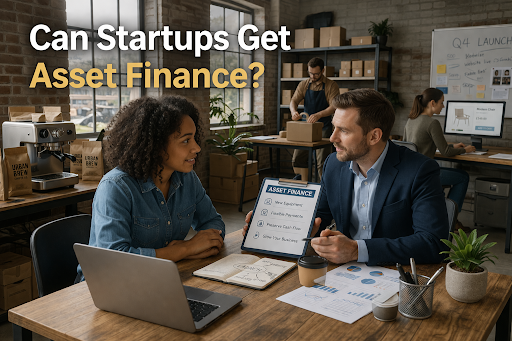
Can Startups Get Asset Finance?
If you’re running a startup, you’ve likely spent your fair share of time staring at spreadsheets, trying to figure out how to stretch your seed funding. One of the biggest hurdles for any new venture—whether you’re opening a boutique coffee roastery in Shoreditch or a tech-heavy manufacturing plant—is the “Big Buy.”
You need the equipment to generate revenue, but the equipment costs more than your current monthly turnover. The question then becomes: Can startups actually get asset finance? The short answer is a deep YES.
But, as with most things in the world of business funding, there’s a bit of a “how” involved. In 2026, the landscape for startup asset finance has evolved, becoming more accessible to founders who know where to look.
The “New Business” Catch-22
Traditional banks have a bit of a reputation for being allergic to startups. They love “three years of audited accounts”, a luxury most startups simply don’t have. It creates a frustrating paradox: you need the asset to prove your business model, but you need a proven business model to get the asset.
It is where specialised startup asset finance providers step in. Unlike a standard bank loan, asset finance is secured against the equipment itself. If things go south, the lender has the machine as collateral. A lower risk for the lender is exactly what opens the door for a business that’s only been trading for six months.
Why Asset Finance is a Startup’s Best Friend
Cash is the lifeblood of a startup. Once it’s gone, the clock starts ticking on your “runway.” Buying a £50,000 piece of machinery outright can chop months off that runway.
By using Startup Asset Finance by Best Asset Finance, you turn a massive, scary capital expenditure (CapEx) into a predictable, manageable operating expense (OpEx). You keep your cash in the bank for things that actually scale your business, like hiring talent, marketing your brand, or R&D, while the equipment sits on your floor, earning its keep.
What Kind of “Kit” Can You Finance?
In 2026, the definition of an “asset” is broader than ever. While we usually think of heavy trucks or industrial ovens, Startup Asset Finance can cover:
- Tech Infrastructure: High-end servers, specialised laptops, and networking gear.
- Specialist Machinery: Whether it’s a 3D printer for a design studio or a CNC machine for a workshop.
- Utility Vehicles: From delivery vans to electric fleets (which often come with “Green” tax incentives this year).
- Soft Assets: Some lenders will now finance office fit-outs, specialised software licenses, and even high-end furniture.
Tips for a Successful Application
While it’s easier than it used to be, you still need to show you’re a serious player. If you’re looking for startup asset finance in 2026, keep these three things in mind:
- Have a Solid Business Plan: Lenders want to see how this specific piece of equipment is going to help you make money. Be clear about your projected ROI.
- Be Ready for a Personal Guarantee: Since the business is new, many lenders will ask the directors to sign a personal guarantee. It’s a standard move in the startup world to bridge the “trust gap.”
- The VAT Factor: Remember that you usually need to pay the VAT upfront. However, many UK lenders now offer “VAT Deferral” options where they cover the VAT for 3 months until you can reclaim it from HMRC.
The Verdict
Don’t let a lack of history stop you from getting the tools you need. Startup asset finance is designed to bypass the rigid barriers of traditional banking.
It allows you to act like a much larger company, using professional-grade equipment to deliver professional-grade results from day one. In a world where speed is everything, waiting three years to “save up” for a machine is often the difference between a startup that soars and one that stalls.
FAQs
1. How long do I need to be trading to qualify?
While 2+ years is ideal, many specialised lenders offer startup asset finance to businesses that have been trading for as little as 3 to 6 months.
2. Do I need a huge deposit?
Not necessarily. While 10% is standard, some “Low Deposit” schemes in 2026 allow startups to get started with just the VAT payment or a single month’s rent upfront.
3. Is the interest rate higher for startups?
Usually, yes. Because you represent a higher risk than an established firm, rates may be slightly higher, but the tax benefits and preserved cash flow often offset this.
4. Can I finance second-hand equipment as a startup?
Yes! It is actually a very smart move for startups. Lenders will fund used assets as long as they have a clear valuation and a few years of “life” left in them.
5. What happens if I want to upgrade later?
If you choose a finance lease, you can often trade in the equipment for a newer model at the end of the term, keeping your startup at the cutting edge of technology.
Stay in touch to get more updates & news on Rep Mold!