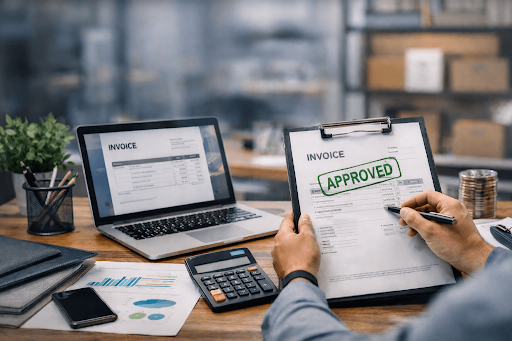
How Invoice Finance Boosts Cash Flow for UK SMEs in 2026
Running a small or medium sized business in the UK often feels like walking a tightrope. Sales might be rising, customers are happy, and yet the bank balance refuses to cooperate. Why? Because invoices rarely get paid the moment they are issued.
Recent industry data from the Federation of Small Businesses shows that late payments cost UK SMEs billions every year and affect thousands of companies’ ability to grow. Many invoices still operate on 30, 60, or even 90 day payment terms. That gap between delivering a service and receiving payment can quietly choke a company’s cash flow.
This is where invoice finance has become a powerful lifeline for modern UK businesses in 2026.
Instead of waiting months for payment, companies unlock the value of their unpaid invoices almost immediately. Cash arrives when the business actually needs it.
Why Cash Flow Is Still the Biggest Challenge for UK SMEs
A profitable business can still struggle to survive if money is tied up in unpaid invoices.
Imagine a recruitment agency that places ten candidates in a month. The clients are billed, revenue is technically earned, yet payment may not arrive for 60 days. Meanwhile, salaries, office rent, software subscriptions, and tax obligations continue ticking along every week.
This timing mismatch is one of the biggest operational risks for SMEs.
Studies from UK finance bodies show that delayed payments force many small companies to delay hiring, postpone investment, or rely on expensive overdrafts. Some even decline new business simply because they cannot afford to wait for payment.
Access to working capital therefore becomes essential.
How Invoice Finance Works in Practice
At its core, invoice finance allows a business to release cash that is already sitting inside its sales ledger.
Here is the typical process:
- A company issues an invoice to its customer.
- A finance provider advances a large percentage of that invoice value, often up to 85 to 95 percent.
- The business receives funds within days rather than weeks.
- Once the customer pays the invoice, the remaining balance is released minus the provider’s fee.
The concept is simple. Instead of waiting for payment terms to expire, businesses convert invoices into immediate working capital.
For companies with consistent B2B clients, this can completely change the rhythm of their cash flow.
Invoice Factoring vs Invoice Discounting
Within the world of invoice finance, two solutions are widely used by UK SMEs.
Invoice Factoring
With Invoice Factoring, the finance provider manages the credit control process. They follow up on outstanding invoices and collect payments from customers.
This option is popular among growing businesses that want to outsource time consuming debtor management while improving cash flow at the same time.
Invoice Discounting
Invoice discounting works slightly differently. The business retains control of its sales ledger and customer relationships, while still accessing funding against invoices.
Established companies with strong financial management often prefer this approach because it operates quietly in the background.
Both options ultimately achieve the same goal. Faster access to working capital.
Why Invoice Finance Is Growing in 2026
The financial landscape for SMEs has changed significantly over the past few years.
Traditional bank lending has become more selective, particularly for newer businesses or companies with fluctuating cash cycles. At the same time, supply chains have grown longer and payment terms remain stubbornly slow.
Invoice based funding offers a flexible alternative.
Rather than relying on credit scores alone, funding is based on the strength of a company’s invoices and its customers’ ability to pay. That means growing businesses can scale their funding alongside their sales.
Many sectors now rely on this model, including recruitment agencies, logistics firms, manufacturing suppliers, construction contractors, and wholesale distributors.
When sales increase, available funding grows naturally.
A Real World Example
Consider a small manufacturing supplier in Manchester that bills £100,000 worth of invoices each month on 60 day terms.
Without funding, the company waits two months to receive that revenue.
With invoice finance, it could access up to £90,000 almost immediately after issuing invoices. That capital can be used to buy materials, hire additional staff, or take on new contracts without financial strain.
Growth becomes possible without constantly worrying about payment delays.
Choosing the Right Funding Partner
Not every finance provider offers the same flexibility, transparency, or support.
Businesses should look for providers that understand their sector, offer clear pricing, and adapt funding as the company grows. Reliable guidance also matters. The right partner helps business owners navigate credit control, customer relationships, and scaling strategies.
A trusted provider of Invoice Factoring, invoice discounting, and broader Invoice finance solutions can make a meaningful difference to long term financial stability.
Conclusion
Cash flow has always been the heartbeat of a business. In 2026, that truth has not changed.
What has changed is how smart businesses manage the gap between issuing invoices and receiving payment.
Invoice finance gives UK SMEs the ability to turn sales into immediate working capital. It removes the pressure created by long payment terms and allows business owners to focus on growth instead of chasing payments.
For many companies, the question is no longer whether they can afford invoice finance.
It is whether they can afford to operate without it.
Businesses looking for flexible funding solutions can explore tailored options through Invoice Factoring, invoice discounting, and specialist Best Factoring.
FAQs
1. What is invoice finance?
Ans. Invoice finance allows businesses to access cash tied up in unpaid invoices instead of waiting for customers to pay.
2. How quickly can businesses receive funds through invoice finance?
Ans. Many providers release funds within 24 to 48 hours after invoices are approved.
3. Is invoice finance suitable for small businesses?
Ans. Yes. Many SMEs use invoice finance because it grows alongside their sales and does not rely solely on traditional bank lending.
4. What is the difference between invoice factoring and invoice discounting?
Ans. Invoice factoring includes credit control services from the provider, while invoice discounting allows businesses to manage their own customer payments.
5. Do customers know when a business uses invoice finance?
Ans. In factoring arrangements they usually do. With invoice discounting, funding can often remain confidential.
Stay in touch to get more updates & news on Rep Mold!