AFCI vs GFCI: What’s the Difference and Where Each Is Required
The provision of electrical safety in our modern-day buildings is not only dependent on good wiring and good-quality appliances. Special protective equipment is now a necessity to minimize the hazards of electric shock and electric fires. The AFCI and GFCI protection are also the two most significant safety technologies at present. The sound of the names is similar, but the purpose of these names is entirely different; they are needed in different places. It is important to be aware of the afci vs gfci and where each is mandatory for building professionals, homeowners, and electricians.

Understanding the Need for Electrical Protection
Electricity is a strong and unseen force that may bring about severe injuries or damage to property, unless it is well managed. There are currently two broad categories of electrical hazards, namely: shock hazard, which endangers human life, and fire hazard, which endangers structures. Traditional circuit breakers are typically installed to guard wiring against overloads and short circuits, and would fail to identify some of the hazardous situations that take place in normal operation. To deal with these hidden risks and offer an increased amount of protection, AFCI and GFCI devices were created.
What Is a GFCI and How Does It Work
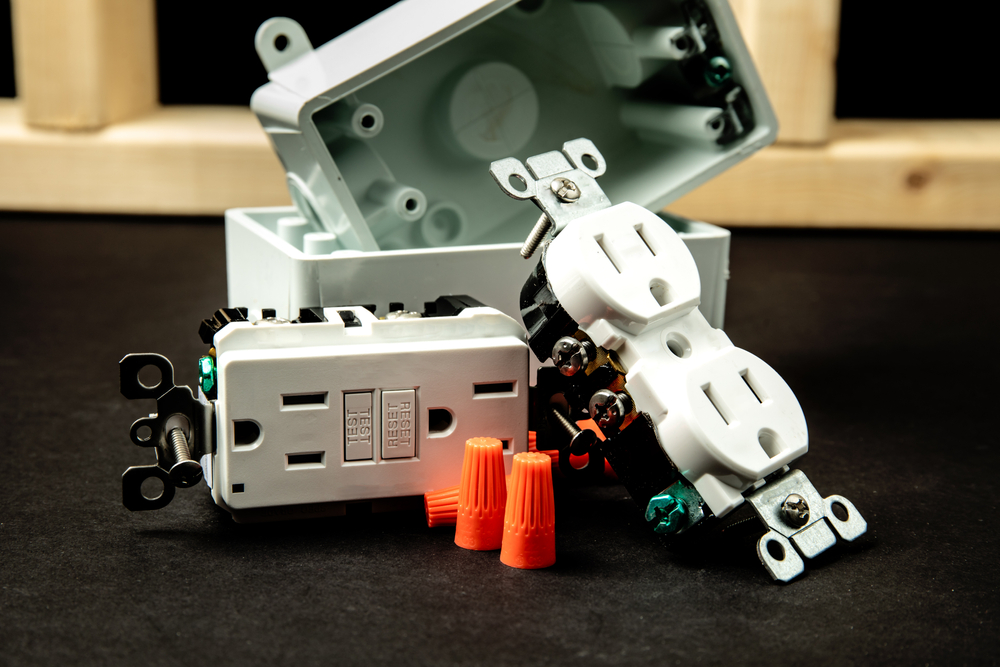
A Ground Fault Circuit Interrupter (GFCI) is created to guard individuals against electric shock. It constantly compares the current that is going through a circuit to the current returning to detect when there is no longer a current. At normal conditions, these currents are equal. In case some difference is found, as small as a few milliamps, the device believes that some electricity is escaping the circuit and could be passing through a person.
Once this imbalance is established, power is short-circuited almost immediately; typically, in a fraction of a second. This quick action avoids serious injury or fatal shock to a large extent. GFCIs are significant, especially in locations where there is a water supply, because some moisture significantly increases the chances of electricity taking an unintended route to the ground.
Where GFCI Protection Is Required
Electrical code in most parts of the world mandates that GFCI covering be used in areas where attacks are most probable. These spaces are usually kitchen spaces, bathroom spaces, laundry spaces, garages, cellars, exterior outlets and other damp spaces. At such places, appliances and tools are commonly utilized along water bodies, which establishes situations that predispose ground faults.
GFCI protection can be offered using GFCI receptacles or GFCI circuit breakers. Both methods have equal protection provided they are installed properly. The only thing that is necessary is that the circuit serving these places should have ground fault protection.
What Is an AFCI and How Does It Work
An Arc Fault Circuit Interrupter, or AFCI, is an interrupt that is aimed at fire prevention, but not shock prevention. Arc faults usually start electrical fires, and they happen when loose or damaged wiring permits electricity to jump across a gap. These arcs create very high temperatures and may cause ignition of adjacent materials like wood framing, insulation or dust.
AFCI is an electrical device that constantly examines the electrical waveform of a circuit and seeks the indicators of hazardous arcing. Compared to the standard sparks that occur on regular switching or when plugging in appliances, arc faults are hazardous, and they exhibit a different signature. With such patterns detected by an AFCI, power is disconnected before a fire can begin.

Where AFCI Protection Is Required
Living spaces are the most likely to suffer an electrical fire without being noticed, and therefore, AFCI protection is usually demanded. These spaces are bedrooms, living rooms, dining rooms, hallways, and closets, among other general living spaces. Cords used in these spaces are often bent, pinched, or damaged by furniture, and the wiring can become damaged by age.
The AFCI requirements have been extended by modern electrical codes to include most domestic circuits serving outlets and lighting. This demonstrates the increased concern of arc faults as a primary cause of residential electrical fire, and the fact that these faults frequently exist in concealed areas behind a wall or a ceiling.
Key Differences Between AFCI and GFCI
The main distinction between AFCI and GFCI is the nature of the hazard that a particular device is programmed to detect. GFCIs are useful in saving human lives by eliminating hazardous ground fault shocks. AFCIs defend property against arc fault fire. The two gadgets are not substitutes, and the application of the incorrect kind of protection can leave critical safety loopholes.
The other difference that is noteworthy is the location of the need for these devices. Where moisture is a risk of a shock, GFCIs are installed, and where wiring damage and fire damage are more frequent in the long term, AFCIs are installed. Their activities are complementary as opposed to overlapping.
Areas Requiring Both AFCI and GFCI Protection
Certain places are shocked and also fire-prone. Such categories include laundry rooms, completed basements, and some kitchen circuits. In such locations, the electrical codes might specify that both AFCI and GFCI protection should be applied on the same circuit. In order to fulfill this need effectively, dual-function AFCI/GFCI units are frequently employed.
Dual-function breakers or receptacles are breakers or receptacles that protect against both arc faults and ground faults. This makes the installation process easy and, at the same time, complies with the contemporary safety requirements.
Why Correct Installation Matters
The most effective protective devices would not work properly when it comes to their proper installation or placement. Proper circuit identification, proper wiring and routine testing are also necessary in a bid to facilitate continued protection. Electrical systems must not be assessed based on the existing code requirements and building conditions.
Professional installation and periodic checking can assist to make sure that AFCI and GFCI devices run as desired at the end of their service.
Conclusion
There is a distinction between AFCI and GFCI, but it is not a preference. GFCI devices save human life by eliminating electric shock, whereas AFCI prevents fires in buildings. They are necessary in particular sections depending on the kind of risk involved, and both are essential in the current electrical safety.
Knowledge about the position of every device is useful in complying with electrical standards and making the environment safe for occupants. Combined with proper installation, AFCI and GFCI protection co-exist as a complete safety system and solve the most widespread and hazardous electrical risks in residential and commercial buildings.
Stay in touch to get more updates & news on Repmold!